It may be scary but it is such a good teaching tool!
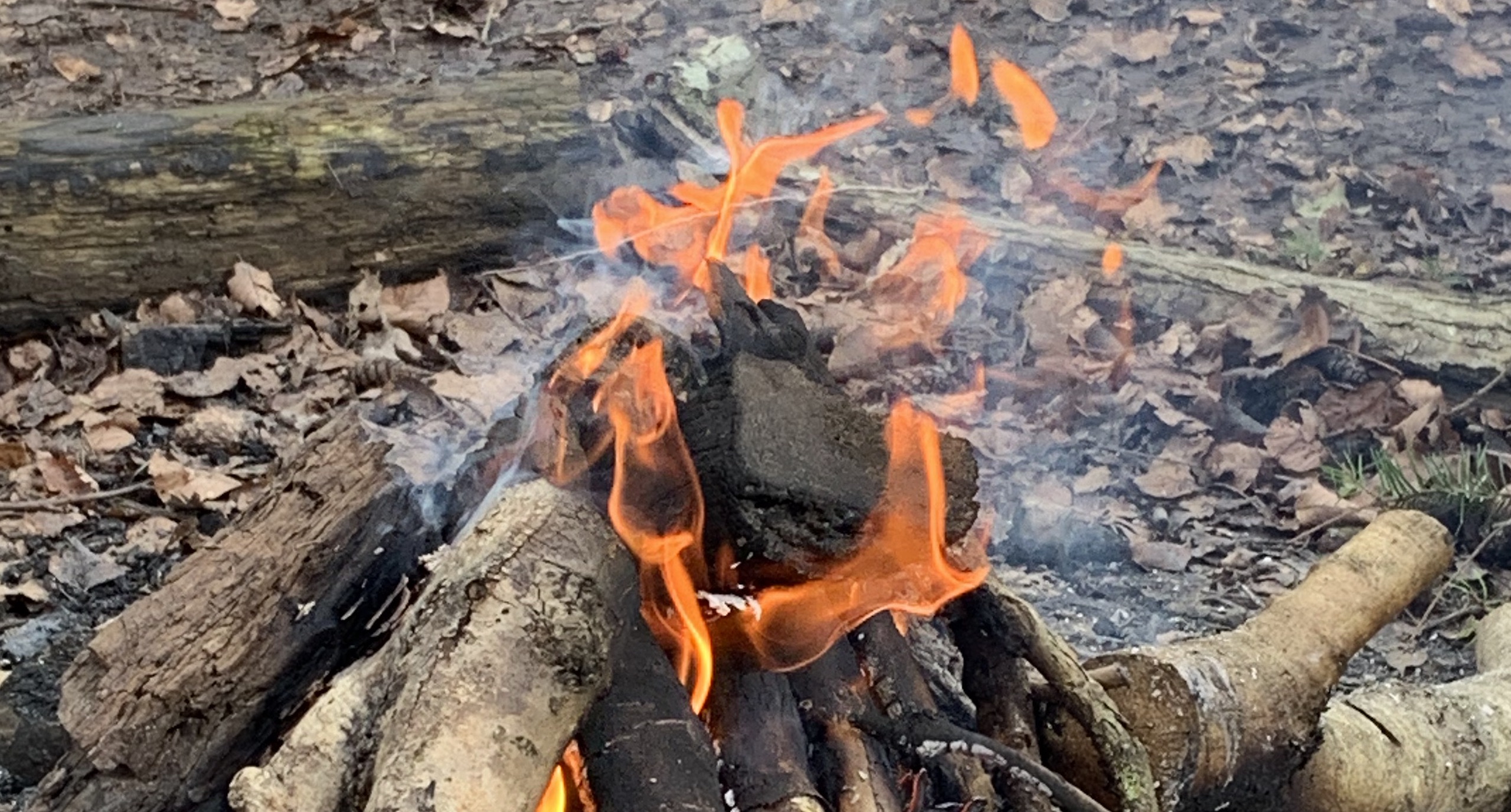
“Having the chance to be a close first-hand witness to the destructive nature of fire and heat adds to the children’s sense of awe at the power of this natural force”
(Rowe and Humphries 2004 p.30)
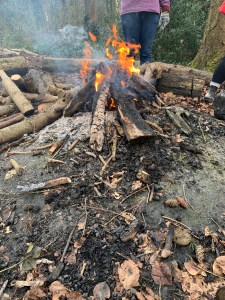
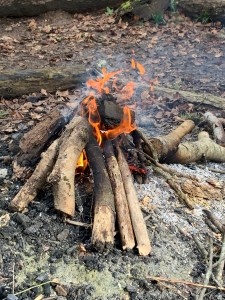
Fire is an exciting way to introduce children to many different parts of science and make a connection with the outdoors. Not only does fire introduce children to science it also provides their imagination and experiences with new opportunities.
Most children in this generation do not get to explore the outdoors as much as generations before them. Therefore the children may not have ever seen fire in real life, so when they get to be around it in forest schools it can ignite the excitement in the children. Hooking children in with the fairy blankets and troll bogeys teaches them whilst playing with their imagination.
The topic of fire can lead to many different learning experiences, covering much of the curriculum. Forest school campfires are an amazing link to many different science subcategories. For example the children can develop their knowledge and understanding of fire itself, the fire triangle, what makes it burn brighter and faster, what makes it burn slower, different temperatures in different parts of the fire, how fires can be beneficial to the environment, how they are bad for the environment, all the uses for fire, smelting, mixing and making metal alloys then forming them into a mould and creating something new and many more topics. These are just links to the science curriculum, no matter the age if a child is around fire it is worth them knowing all of these things, even if it is at varying degrees of intensity.
The fire can also be used to explain chemical reactions, the importance of heat in reactions, the different ways different woods burn, and other fire related but not specific knowledge.
The Fire can also inspire learning back in the classroom. It can inspire the children to create writing masterpieces in English, the long History of the campfire, many different food recipes for either Food technology or Mathematics, the uses and stories about fire from different countries for Geography, the importance of fire in different religious stories for RE and inspire art work and designs in both Art and Design technology. All of the above just from an experience with a real campfire.
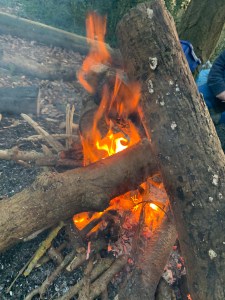
In the Forest the fire can be used for; cooking, there is many recipes that are designed to be made on a campfire. It can be used for smelting metals, allowing children to understand metal alloys and metal mixings and melting points and it can also be used to make different materials, we have made charcoal out of hazel wood, by taking the bark off of the wood itself then, putting it into a airtight container and then baking it on the fire and ink from Galls, from an Oak tree.
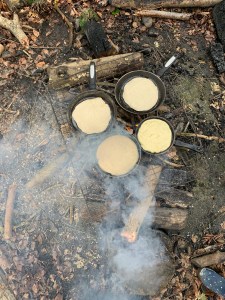
This is campfire cooking 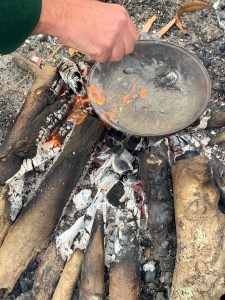
This is an example of smelting metal alloys on a fire 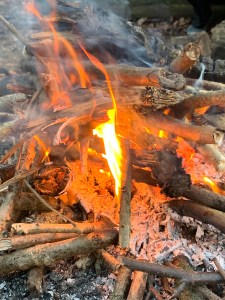
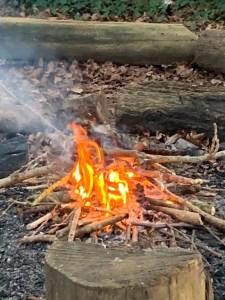
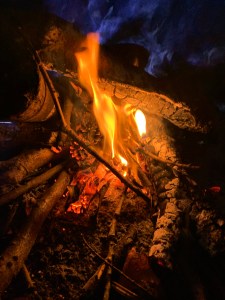
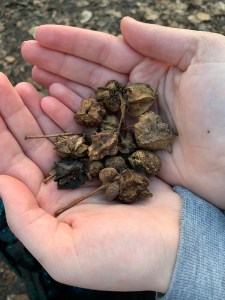
These are Galls that can make ink 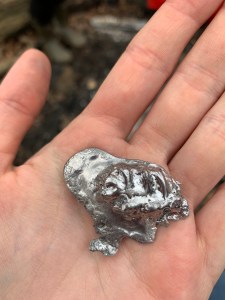
This is our metal alloy once it has come out the mould
- References
- S.Rowe and S.Humphries (no date) ‘The Outdoor Classroom’ in M.Braund and M.Reiss (eds.) Learning science outside the classroom London: Routledge
 Caitin's Science Blog
You make a strong case for the use of fire (and I am pleased you feel confident yourself to use fire in teaching). If you had some spare time, it would be *so* useful to add some links to this bl g entry so for each of the ideas the link takes readers to a “how to do it” page (perhaps somebody else’s – or perhaps your own)
LikeLike
oops, sorry, not sure why my comment came from “Peter Tech theatre” account – it is from Duncan!!!
LikeLike